Final Quests
Final Quests is a board game that I’ve worked on and off on since high school. It’s a game that I always come back to, and thus I have many different prototypes of the game from over the years. It’s an interesting project to me particularly because I believe it helps show my growth as a game designer over the years.


Not only does this project show my growth in design, but also with technical skills. The first prototype I made I used InkScape and many free to use programs in order to get a solid looking prototype for my college applications. Nowadays I use the Adobe Suite which streamlines a lot of my work for newer prototypes.
The first version of Final Quests was a 1v1 game. Each player had access to four unique characters and a base. The game was won in four different ways you could defeat the other players leader, complete a Final Quest, complete your bases win condition, or by having your opponents losing condition occur. The game took place on a chess-like board, which allowed quests to spawn on specific locations, and for monsters to move organically.
You can read the rules to the first iteration of Final Quests here.
The second iteration of Final Quests was a four player game, but kept combat as 1v1. The first half of the game saw players building up their player board and taking quests for the combat phase of the game. In the second half of the game, players would combine their player boards to create a larger board and duke it out via combat. This game saw the introduction of each faction having many more characters, which ultimately was what I decided on as being what made Final Quests stand out from other asymetrical games.
I ended up iterating on this prototype again, mostly due to its pacing. I thought the seperation of the two parts of the game felt a bit awkward, and was looking to create a game where both can take place at the same time.
You can read the design document / rules outline of the second iteration of Final Quests here.

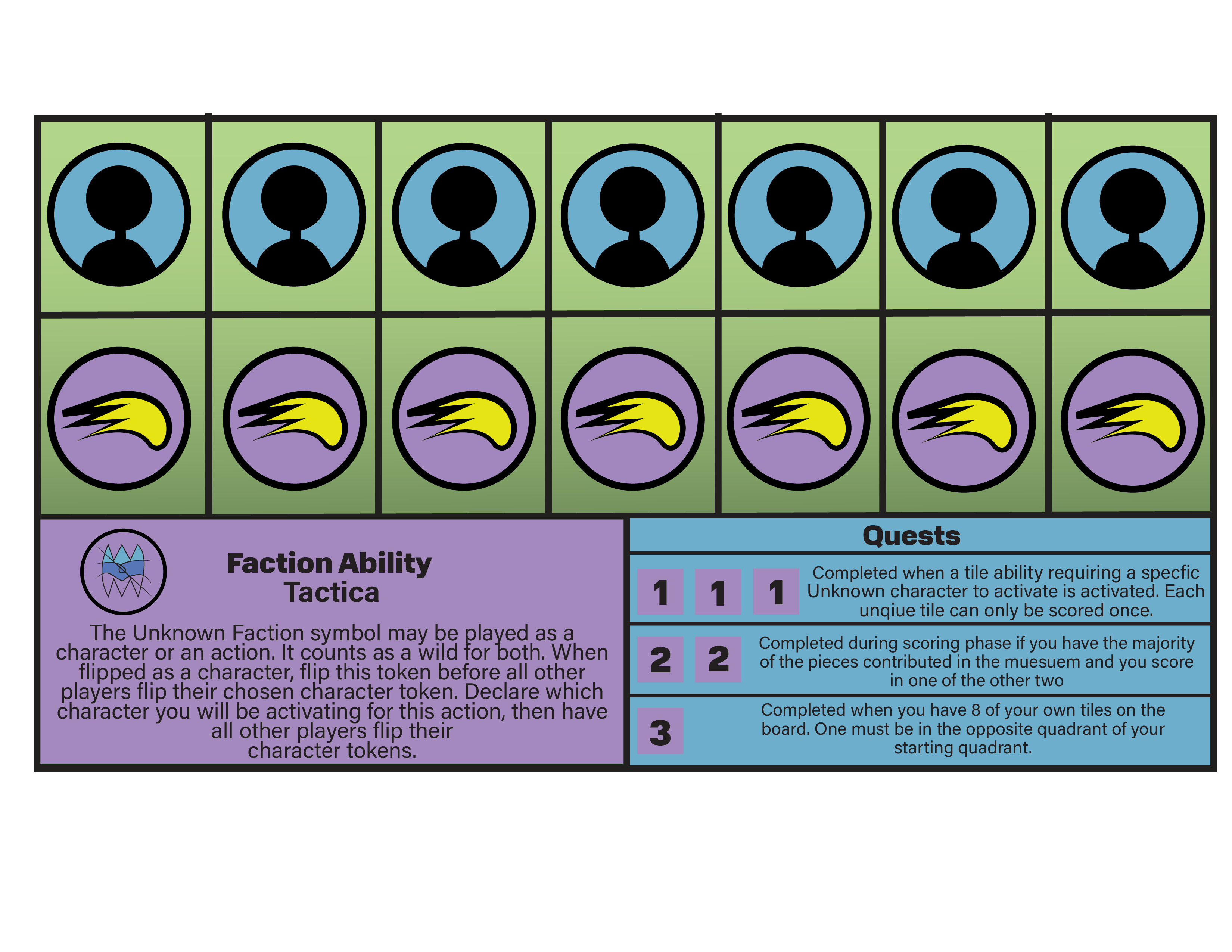
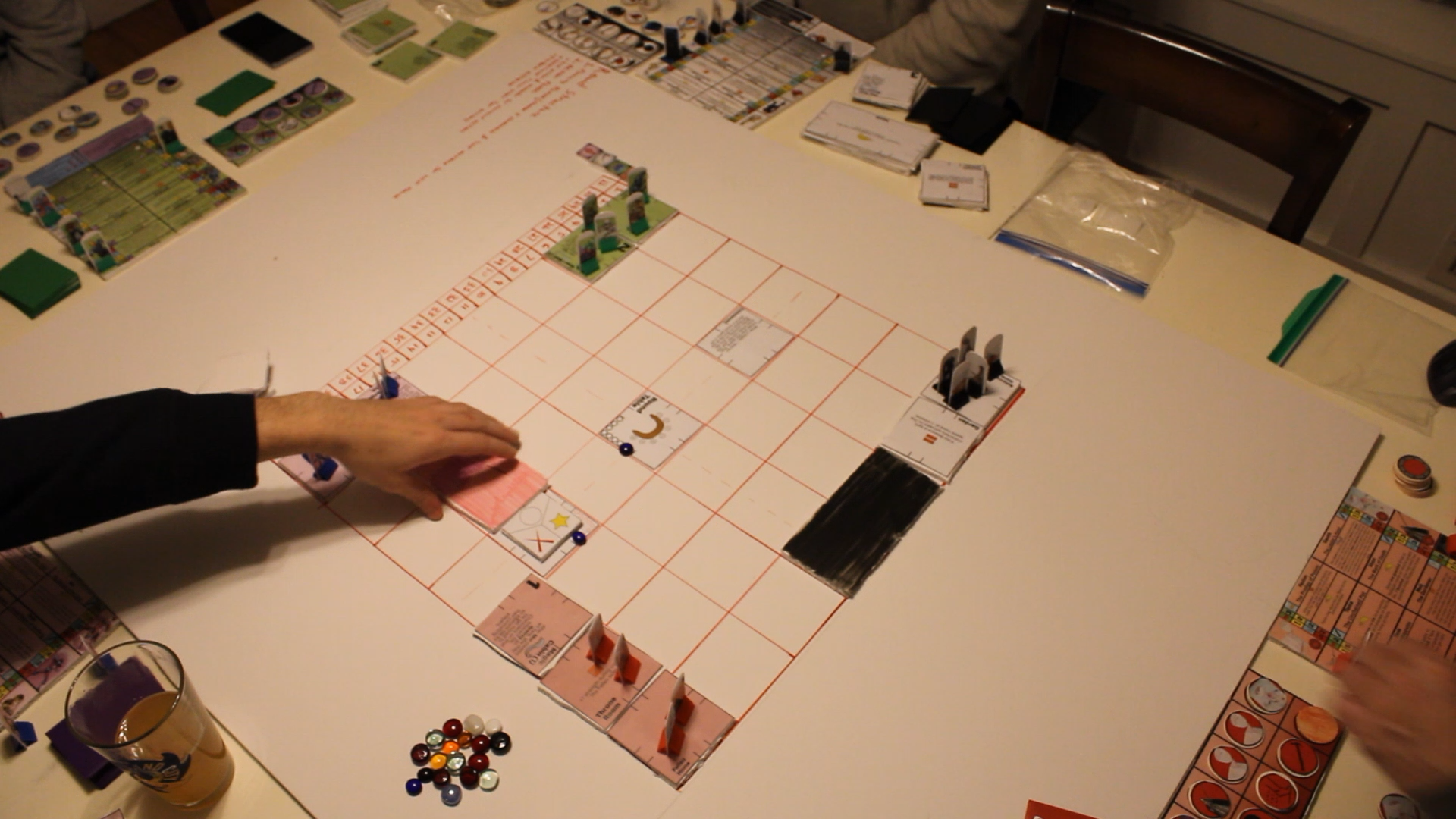
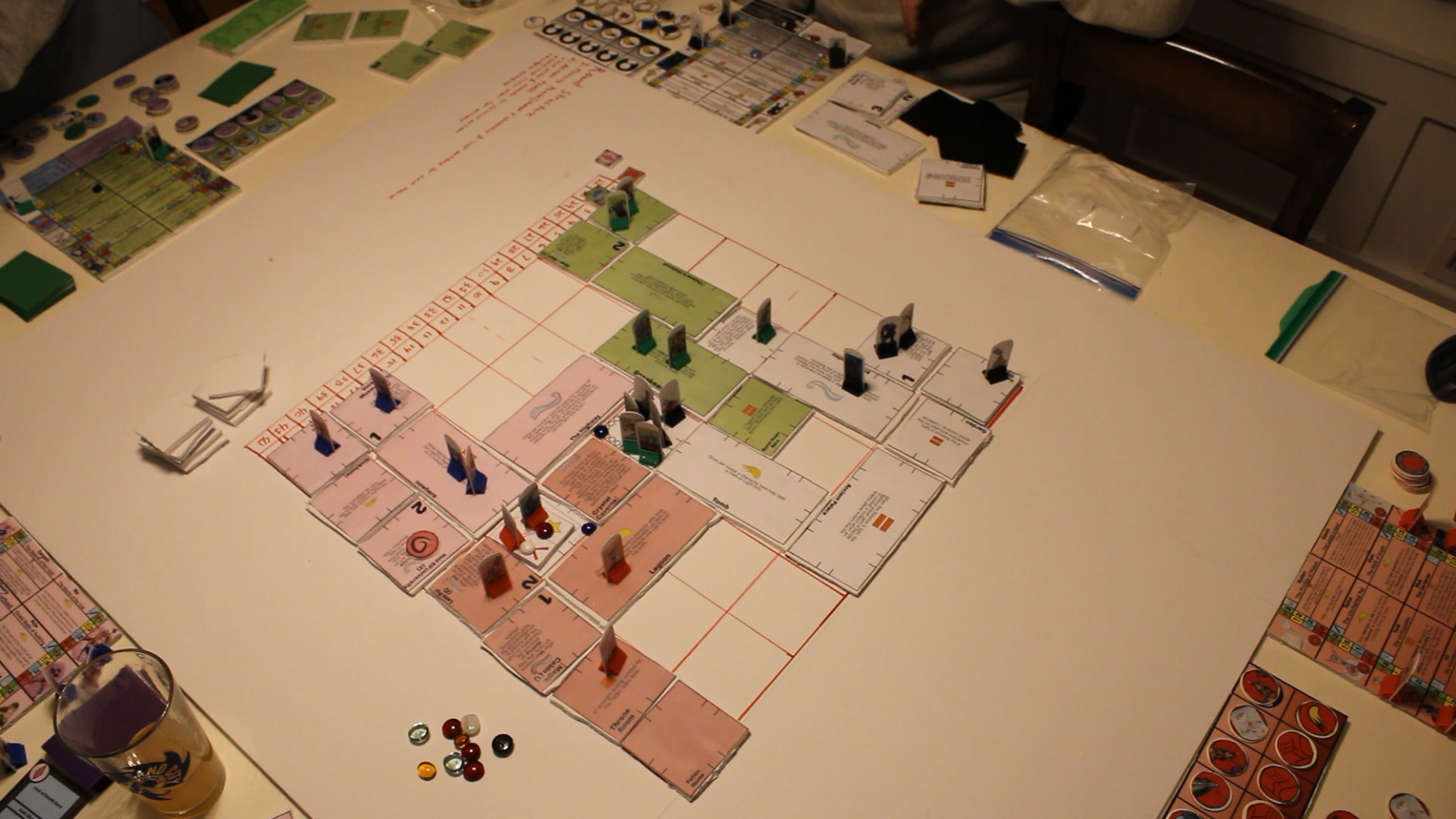
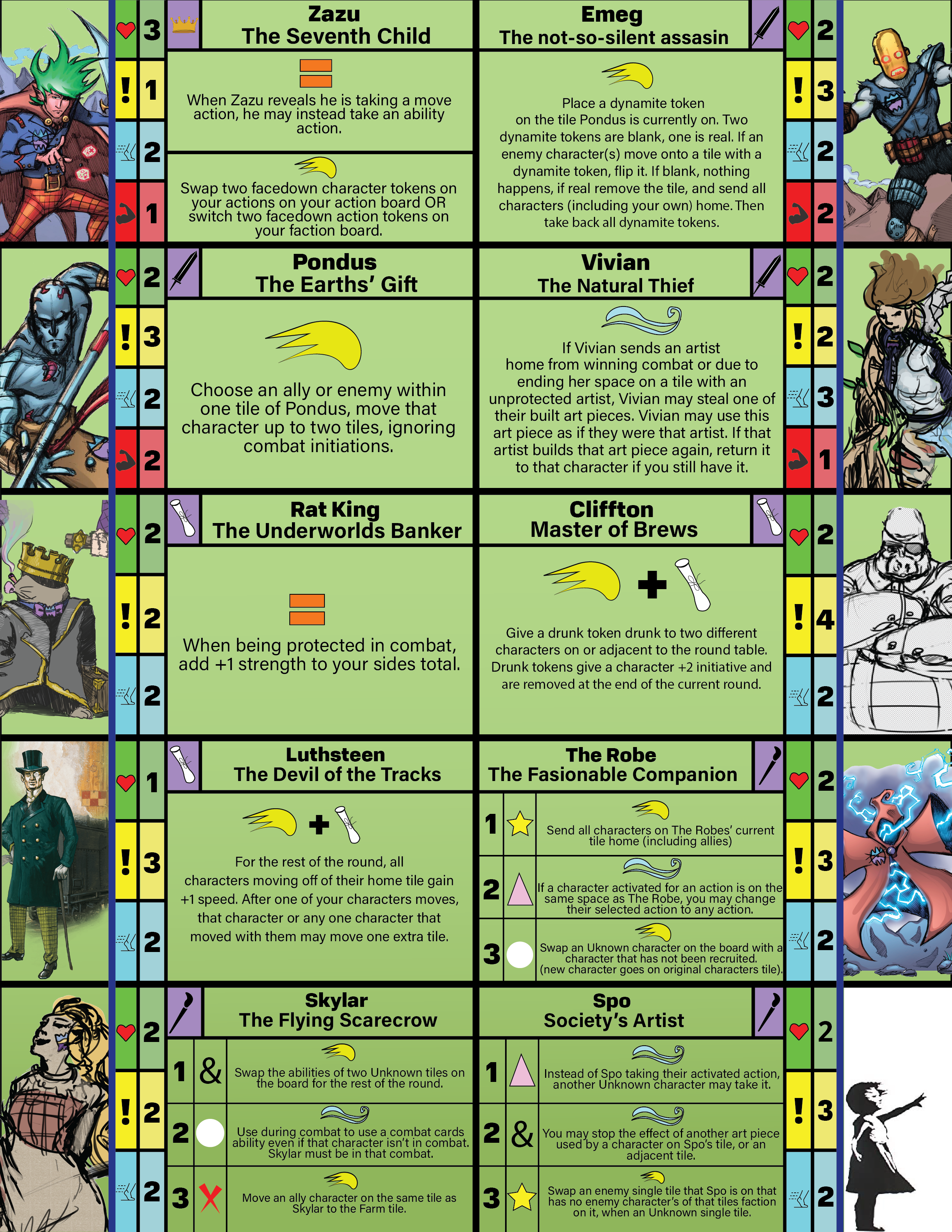
Lastly, the third iteration of Final Quests and the one I’m currently working on, looked to combine the two while adding new mechanics. The third iteration of the game is four players, with each player all playing on the same board. Each player plays as a faction that’s composed of ten characters. Each faction as one leader, three warriors, three politicians, and three artists. Each faction also has ten tiles to build out the board with. In the middle of the board there are three tiles that each score using one of the three character types (warrior, politician, or artist).
You can read the design document for the third iteration of Final Quests here.
One other great learning experience this game gave me was working with an artist. I worked with Tom Travers on the first prototype. This was my first experience working with an artist, and overall I think it went quite well. I worked with Tom for one Summer. At the start of the project I gave him a brief description of every asset that I needed for the project. Throughout the Summer we were in constant talks about changes to art. He would also challenge me on certain ideas that I had, and often times I saw he was correct. Overall, working with Tom was a huge learning experience.
During this project I’ve used the following software:
- Adobe Illustrator
- Adobe Photoshop
- Adobe Premiere Pro (for design logs)
- InkScape
